How do I compost correctly?
Basics of proper composting with the SUPERCOMP
The SUPERCOMP is completely closed, offering comprehensive protection against flies, mice, rats, snails, etc.
The precisely manufactured tongue-and-groove system ensures seamless transitions between the individual plug-in elements, keeping everything sealed and preventing pests from entering.
In addition, integrated ventilation grilles with very fine perforations and sealing strips on all openings (cover, door, ventilation) ensure a secure seal.
Thanks to vertical ventilation (chimney effect), the compost heap is evenly supplied with oxygen right down to its core. This prevents the formation of pockets of decay that could attract odors or pests.
This ensures that the SUPERCOMP remains permanently clean, hygienic, and free of unwanted visitors.
Why the SUPERCOMP makes composting easier
The SUPERCOMP is not a conventional composter. Its closed design, integrated support and sliding mechanism, complete pest protection, and vertical ventilation ensure an even, hygienic, and controlled composting process. The so-called chimney effect ensures that the compost receives sufficient oxygen even inside. Rot, odors, and turning are now a thing of the past. There is no need to turn the compost pile at all.
Composting withSUPERCOMP the most important basic rules
Composting with SUPERCOMP never been easier—just keep these 3 points in mind:
- Always add woody material to the kitchen waste, e.g. leaves, branches (chopped) from the garden, sawdust. So don't put napkins in the waste paper, but compost them with the leftovers. Cover meat waste from flies, sometimes add some lime or earth.
- Add water during prolonged dry spells. You can also use water to "oil" the sliding elements, thereby increasing the sliding speed. Empty the storage chamber regularly, leaving compost residues behind to support the pile (if you want to compost more slowly) and also to absorb the valuable seepage water that is released during the composting process.
- However, if the compost is too wet, add woody materials such as straw, dry grass, bark mulch, paper napkins, paper bags, and partially decomposed leaves.
The same applies here: the better the carbon-nitrogen ratio and the more diverse the waste, the better and faster the composting process.
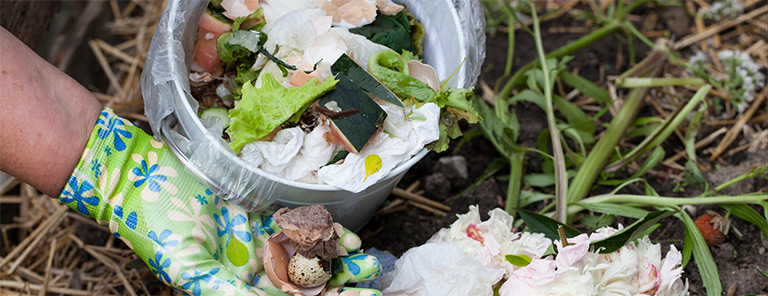
The more varied the mixture of waste, the better the quality of the end product. Add a shovel of rock dust, lime, and soil from time to time.
What can be put on the compost heap?
- Kitchen waste such as all cooked and raw vegetable and fruit scraps
- Citrus fruits and peels
- Coffee grounds and tea bags
- eggshells
- Leaves, shrub and hedge trimmings, and garden waste
- Shredded branches and wood scraps
- Paper napkins, cardboard (shredded)
- Fresh grass and grass clippings
Nitrogen-rich waste includes fruit and vegetable scraps, coffee grounds and tea leaves, potato tops, grass and lawn clippings, bouquets and potted plants, banana and tropical fruit peels, weeds (without seeds, otherwise dried), wool, and hair.
Carbon-rich wasteincludes tree, shrub, and hedge trimmings, leaves, bark, straw, hay, wood shavings, sawdust, napkins, and paper bags.
What should not be put on the compost heap?
- Large quantities of meat and fish. Cover small quantities to protect them from flies.
- Plastics and composite materials
- Ash from coal or treated wood
- vacuum cleaner bag
- Diseased plant material
- Metals, glass, leather, or stones
Advantages of SUPERCOMP as a worm composter
As a worm composter, the SUPERCOMP provides ideal living conditions for compost worms. The quiet environment without turning, the constant supply of oxygen, and the loose structure promote high worm activity. This results in particularly fine, nutrient-rich worm humus, which sustainably improves plant growth, soil life, and water storage.
What advantages does a composter generally offer?
Composting reduces organic waste, saves on waste disposal costs, and closes natural material cycles. Instead of disposing of waste, valuable soil is created for gardens, raised beds, and plants. A high-quality composter such as the SUPERCOMP combines these advantages with convenience, hygiene, and efficiency.
FAQ – Frequently asked questions about proper composting
How long does composting take with the SUPERCOMP?
Thanks to optimal ventilation and stable conditions, the process is significantly faster than with conventional composters.
Do I have to turn the compost?
No, there is no need to turn the compost, as it is kept loose and fully aerated.
Can I compost all year round?
Yes, the SUPERCOMP is suitable for year-round outdoor use.
Does proper composting produce an odor?
No, thanks to vertical ventilation from SUPERCOMP , there are no unpleasant odors.
Is the SUPERCOMP also suitable for beginners?
Yes, beginners in particular benefit from the simple handling and reliable technology.